Faker's Real Soloqueue Stats, Analyzed by AI: What Pro Numbers Actually Look Like
8 min read
Real ranked match data pulled from Faker's public account and run through AI analysis. The actual CS/min, damage share, and vision numbers of a pro, what they teach beginners, and every match ID so you can verify it yourself.
This article is currently shown in English. A translation is in progress.
CHAMPION LENS
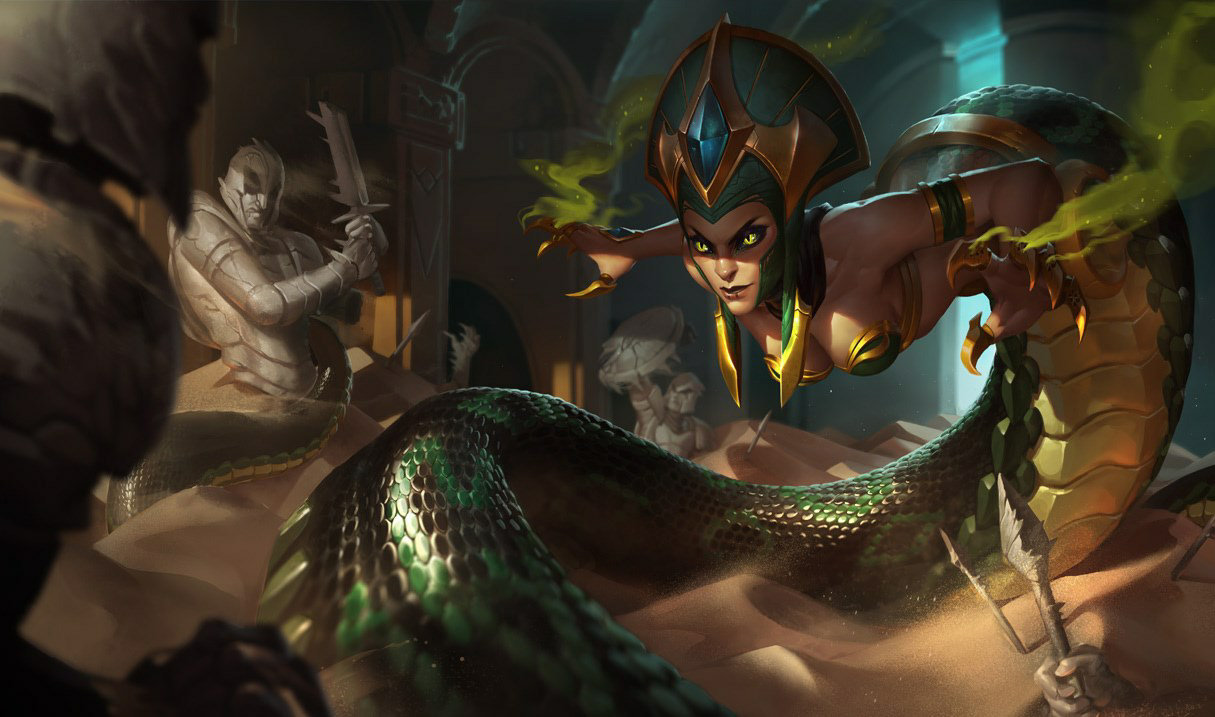
Cassiopeia
 Sylas
Sylas Ahri
Ahri Yone
Yone Azir
Azir"How good are a pro's numbers, really?" — let's answer that with real data, not guesses.
We pulled actual ranked games from Faker's public soloqueue account (Hide on bush #KR1) via Riot's official API and ran them through the kind of AI analysis LoL2LLM is built for. Every match ID is listed so you can verify it.
Source: Riot Games official API (Match-v5), ranked solo/duo (queue 420), patch 16.12, snapshot dated 2026-06-13. Account is Faker's public main "Hide on bush #KR1." This is a quotation of public game data and is not endorsed by or affiliated with Riot Games.
Case study: completely smashing lane on Cassiopeia — and losing
Match KR_8257207023 (36 min, result: loss). On Cassiopeia, Faker statistically dominated his Sylas opponent.
 Faker · Cassiopeiavs · Sylas
| Metric | Faker (Cassiopeia) | Opponent (Sylas) | Gap |
|---|---|---|---|
| KDA | 9 / 8 / 3 | 1 / 5 / 9 | +8 kills |
| CS (CS/min) | 327 (9.0) | 213 (5.9) | +114 (+3.1/min) |
| Gold | 16,942 | 11,395 | +5,547 |
| Damage to champions | 46,022 | 16,113 | ~2.9× |
| Damage share | 33% | — | team's top damage |
The CS gap is 114 (about 3.1 CS/min) and the damage is ~2.9×. As a lane, it's a blowout.
And it's still a loss. This is exactly the thing beginners misread — "I won lane but lost, it's my team's fault" — shown directly in a pro's own game.
What AI analysis returns on this match
Feed that data (plus the in-game timeline) to an AI with "explain, for a beginner, what decided the result" and you typically get:
The lane lead is there: CS/min, gold, and damage all crush the opponent. Lane-phase mechanics are not the problem.
8 deaths point to a "converting the lead" problem: being this far ahead yet dying 8 times suggests the lead was lost in fights/catches before it was turned into sidelane pressure or objectives.
Vision 42 / 2 control wards is the upside: this far ahead, the job is to light up the map and safely impose the lead. The ahead player benefits most from vision.
The point is that the AI doesn't stop at "good/bad KDA" — it forms a hypothesis from the contradiction between signals (big lead × many deaths).
That's the analysis you can only get from structured data, not a single screenshot.
Across 6 games, the real problem appears
Line up the most recent six games from the same day (all mid) and something more interesting shows up.
| Champ | KDA | CS/min | Damage share | Result |
|---|---|---|---|---|
| Cassiopeia | 9/8/3 | 9.0 | 33% | Loss |
| Ahri | 5/8/3 | 8.4 | 29% | Loss |
| Yone | 1/6/3 | 9.4 | 23% | Loss |
| Yone | 0/5/2 | 9.0 | 21% | Loss |
Notice that CS/min stays consistently high at 8.4–9.4 while deaths pile up (6, 8, 5…) across a six-game losing streak.
Even a top-of-the-world player can keep farming (CS/min) rock-steady while results slide — individual stats like CS/min and match outcome are surprisingly decoupled in the short run.
Looking across games surfaces a reproducible pattern ("the issue today is death management, not farm") that a single game can never reveal.
What beginners can take from this real data
Winning lane and winning the game are different things. A CS lead is a prerequisite, not the win itself.
9.0 CS/min is "standard, not a spike" even for a pro. Which means it's the most reproducibly trainable metric at any rank (see the target-numbers guide).
A losing streak isn't proof your skill dropped — the data shows it. If CS/min holds, keep your head and keep queuing; if it drops, that's your signal to stop.
Never judge off one game. The repeating weakness only appears across several.
How to do this on your own account
The "gap-to-opponent table" and the "multi-game line-up" shown here need no special tooling — LoL2LLM reproduces both.
Search your Riot ID, pick games, export the data, and ask ChatGPT or Claude to "anchor on the gap to my lane opponent and name two weaknesses that repeat across games."
A pro's numbers are best used as a benchmark to locate where you are — not as something to copy outright.
Read another guide
 Jhin
JhinWhat Are a Pro ADC's CS/min, KP, and Vision Numbers? Gumayusi's Real Data, AI-Analyzed
Real Challenger match data from Worlds-winning ADC Gumayusi's public account, run through AI analysis. The actual CS/min, kill participation, damage share, and control-ward counts of a pro ADC, with match IDs you can verify.
(English) Camille
What Are a Pro Support's Vision Score and Control Ward Numbers? Keria's Real Data, AI-Analyzed
Real Grandmaster match data from T1 support Keria's public account, pulled via Riot's official API and run through AI analysis. The actual vision score, control ward counts, and kill participation of a pro support, plus what to track when CS/min doesn't apply, with match IDs you can verify.
(English) Twisted Fate
What Are a Pro Top Laner's CS/min and Kill Participation? Kiin's Real Data, AI-Analyzed
Real Grandmaster match data from Gen.G top laner Kiin's public account, pulled via Riot's official API and run through AI analysis. The actual CS/min, kill participation, and damage share of a pro top laner, and why KP runs so much lower in the 'island' lane, with match IDs you can verify.
(English)