Vision Score by Role: It's Not Just the Support's Job
6 min read
How vision score is calculated, the per-role targets that actually matter, and the three timing rules that determine where wards go.
This article is currently shown in English. A translation is in progress.
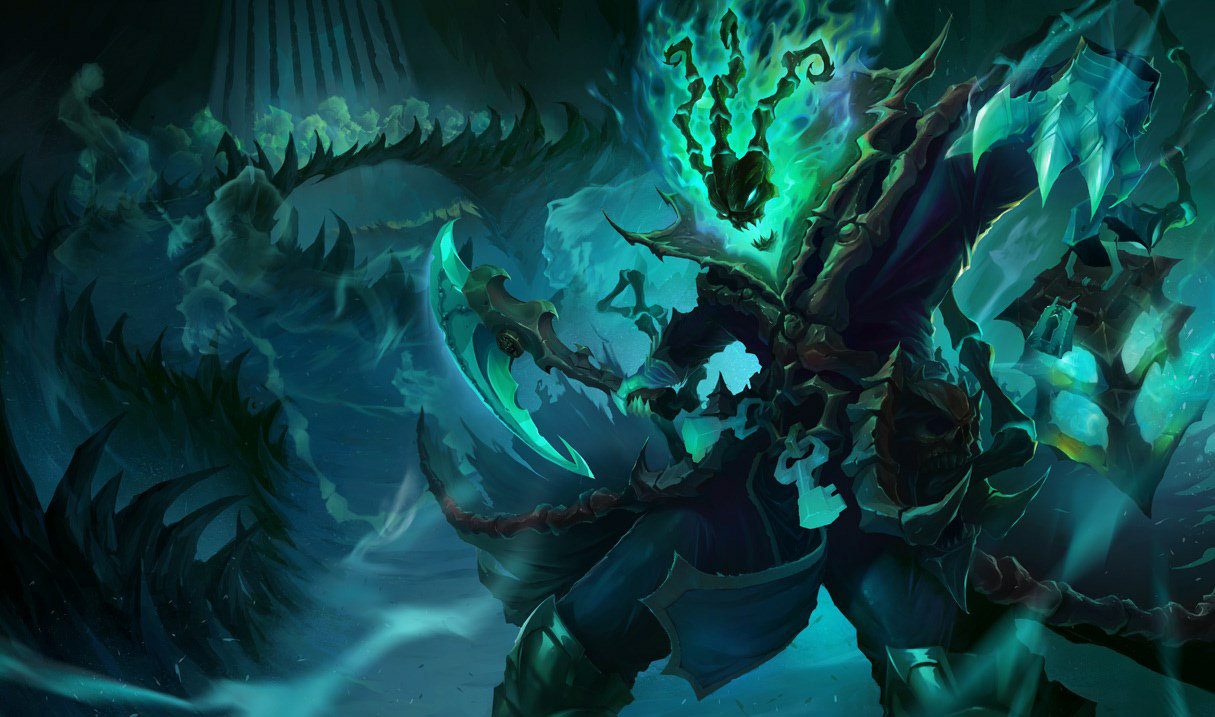
CHAMPION LENS
Thresh
 Lee Sin
 Ahri
Ahri Jinx
Jinx Shen
ShenMost players treat vision as "the support's problem." But a large fraction of stuck Silver-to-Gold games are lost to non-support roles refusing to participate in vision at all. Here's how vision score is calculated, what to aim for at each role, and the timing rules that distinguish wards-placed-anywhere from wards-that-actually-mattered.
How vision score is computed
Vision score sums:
Time your placed wards spent alive on the map
Enemy wards destroyed (fixed value per kill)
Control ward uptime
The key insight: placing wards isn't enough. Four stealth wards placed in your own jungle that get killed in a minute give you nearly nothing. One control ward in drake pit that lives four minutes is enormous.
Support
30-minute benchmarks:
Under 40: rough — wards are dying instantly or you didn't place them
40–60: solid Gold
60–80: Plat-and-above behavior
80+: top of Master
Support target per game: 5+ control wards bought, 8+ enemy wards killed. Hitting both numbers naturally pushes vision score above 60.
Jungle
Standard range is 35–50. Three habits get you there: ward the entrance to the lane you're ganking, control-ward objectives 90 seconds early, kill the wards in the enemy jungle on the way through.
The single highest-impact ward is the one before a gank. Walking into a lane without enemy jungle vision means you either die to the counter-gank or watch the enemy escape with summoners up. Gank success rate roughly doubles when that one ward is in.
Solo lanes (top, mid)
Most laners ignore vision; they shouldn't. Solo lane target is 20–35. Mid in particular sits in the middle of the map and has a vision responsibility on the river.
Targets:
6–10 stealth wards in side rivers
At least 1 control ward (around tower-dive windows)
3–5 enemy wards killed
ADC
ADC is the role most likely to ward zero times in a game. Target: 20–30.
Where it counts:
Bot lane brushes when the enemy jungler is near
Drake-pit control ward (don't leave that to support alone)
A control ward at your own feet before late-game fights
Three timing rules for placing wards
90 seconds before an objective: control wards go in early. 30 seconds before drake is too late — the fight has already started.
Just before recall: drop wards in the brushes around your lane before backing. You return safely.
When enemy jungler is unknown: ward the river before extending. Always.
Prompt to ask the AI
The JSON has enough vision data for solid self-review:
Compared to expectations for my role, which of placement, denial (wards killed), or control wards was the biggest gap this game?
Frequently asked questions
What is vision score in League of Legends?
It sums the time your placed wards stayed alive, the enemy wards you destroyed, and your control ward uptime. Placing wards isn't enough — wards that die in a minute contribute almost nothing, while vision that survives is worth a lot.
What is a good vision score?
In a 30-minute game: support at 40-60 is solid Gold, 60-80 is Platinum-and-above behavior, and 80+ is top of Master. Jungle should land at 35-50, solo lanes (top and mid) at 20-35, and ADC at 20-30.
How do I increase my vision score?
Follow the three timing rules: place a control ward 90 seconds before dragon or Baron spawns, ward the brushes around your lane just before recalling, and ward the river before extending whenever the enemy jungler's position is unknown. Killing enemy wards also feeds the score directly.
Should non-support roles ward too?
Yes. Solo laners should aim for a 20-35 vision score with 6-10 stealth wards in side rivers, at least one control ward, and 3-5 enemy wards killed. Dodging ganks and reaching objectives first depend on every role's vision.
Read another guide
 Lee Sin
Jungle Pathing 101: Evaluate Your Jungle Game From the Match Data
Jungle gives the least real-time feedback of any role. The fix is a post-game review framework grounded in your own export — here's the one I use.
(English) Jinx
JinxADC Positioning: What KDA Hides and Damage Share Reveals
An ADC's real job is sustained damage in fights, not staying alive. Four metrics that catch the "safe but useless" pattern KDA can't see.
(English) Renekton
Wave Management 101: Freezing, Slow Pushing, and Crashing
The single biggest skill gap in League of Legends laning is minion wave management. A beginner-friendly breakdown of the three actions — freeze, slow push, crash — when to use each, and how to spot your own wave mistakes from CS difference with AI.
(English)